Close

Knee replacement surgery with modern, personalised solutions

Get back to moving with confidence and freedom, without pain!

At Emineo Private Hospital, Hungary’s leading knee replacement specialists select the right combination of prosthesis type and surgical technology based on the condition of your knee, your anatomy, lifestyle, age and bone quality. We perform conventional, patient-specific instrumentation (PSI), ROSA® robot-assisted and revision knee replacements, and we support your recovery throughout your patient journey – from the first examination through surgery to rehabilitation.

Do you know you need a knee replacement? Or do you not have a diagnosis yet and are just exploring your options?
 

Book online Call us now

Book an appointment with our knee specialists for a knee surgery consultation!

Térdprotézis műtét személyre szabott megoldásokkal Budapesten
✕

Hungary’s leading knee replacement specialists, internationally recognised experts

Personalised knee replacement solutions

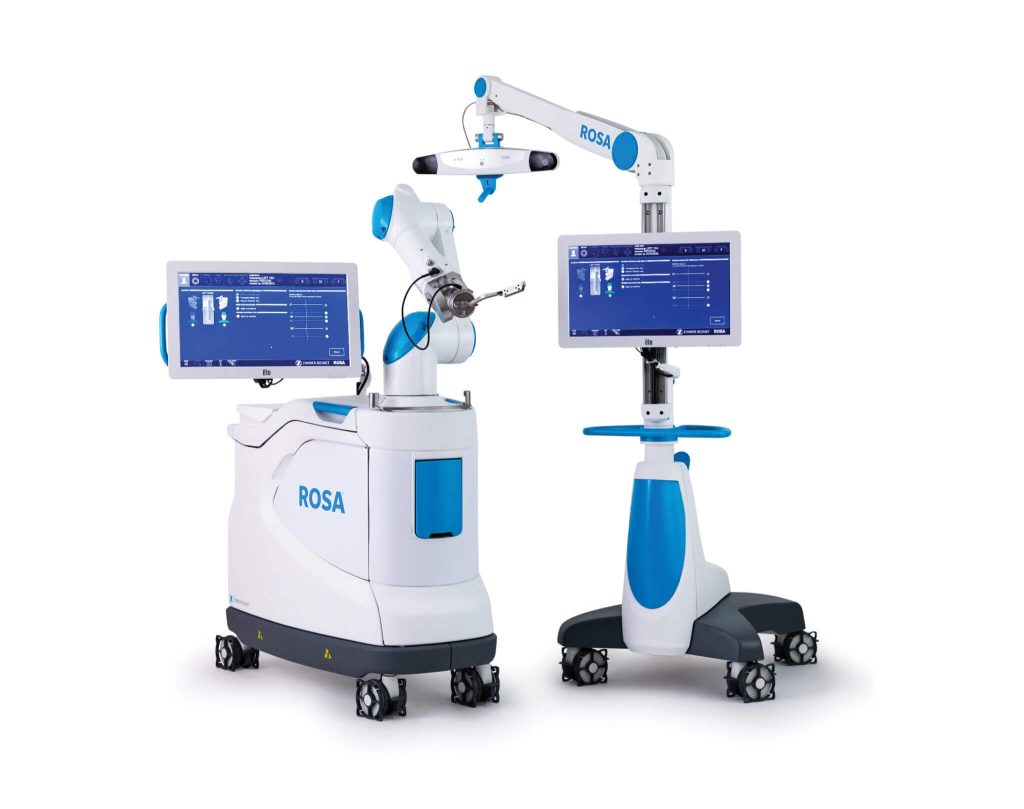
ROSA robot-assisted technology

Personalised rehabilitation after surgery

Premium-quality, long-lasting implants

State-of-the-art operating theatres and inpatient ward in a modern private hospital setting

Are you facing knee replacement surgery, or are you just starting to learn about the topic?

Térdprotézis műtéti megoldások az Emineo Magánkórházban

Personalised knee replacement solutions

Every knee replacement we perform is tailored to the individual. The type, size and fixation of the implant, and the way it is implanted, are determined individually for each patient.

When making this decision, our knee replacement specialists consider, among other things:

  • the location and extent of knee wear,
  • the alignment of the knee,
  • the condition and tension of the ligaments,
  • bone quality,
  • previous knee injuries and surgeries,
  • the patient’s age and activity level,
  • and individual rehabilitation needs.

Let’s check our solutions.

Our knee replacement surgery options

ROSA® robot-assisted knee replacement

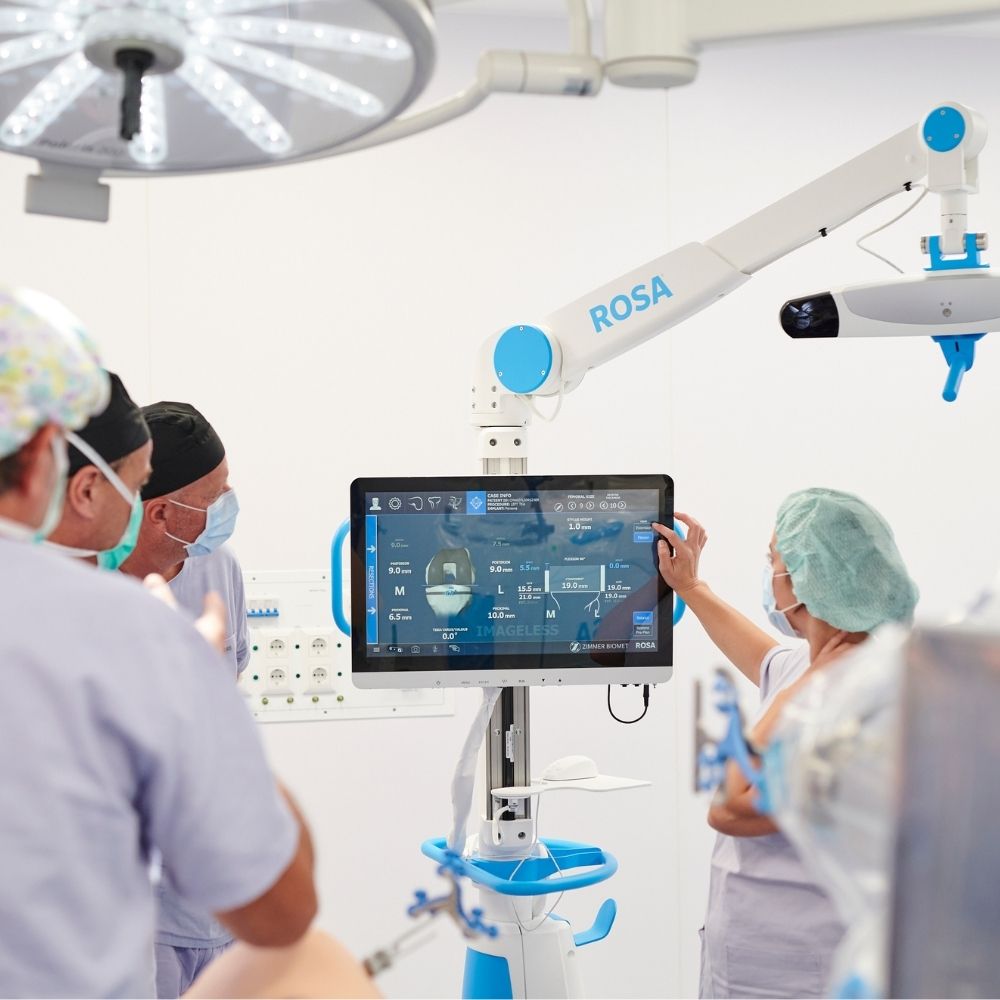
An advanced knee replacement technique. During surgery, ROSA® robot-assisted technology uses real-time measurements to help precisely assess the knee’s anatomy, alignment and soft-tissue balance. The robot does not operate on its own: the orthopaedic surgeon performs the procedure, while the system supports personalised planning and precise execution.

Patient-specific instrumentation (PSI) knee replacement

In this procedure, a custom-made surgical guide is manufactured based on MRI scans. It helps the surgeon position the implant in accordance with the knee’s individual anatomy.

Conventional knee replacement

Conventional knee replacement is a long-established, proven procedure in which the orthopaedic surgeon implants the prosthesis based on imaging, anatomical landmarks and intraoperative measurements. It is a widely applicable solution for advanced knee osteoarthritis.

Revision knee replacement

Revision knee replacement may be needed if a previously implanted prosthesis becomes loose, worn or unstable, or fails to function properly for another reason. The procedure involves partial or complete replacement of the old implant, always based on an individual surgical plan.

The most suitable solution for each patient is always determined by the orthopaedic knee specialist!

Book a Consultation with a Knee Specialist!

ROSA® Ortopéd Robotsebészeti Központ

One of the largest orthopaedic robotic surgery centres in Central and Eastern Europe

16 specialist orthopaedic surgeons, some of the most advanced technology available, premium implants

In September 2024, Emineo Private Hospital was among the first in Hungary to use the ROSA (Robotic Surgical Assistant) system for knee replacement surgery. Since then, we have performed more than 300 robot-assisted surgeries. Robot-assisted technology enables more precise implantation, less tissue trauma and faster post-operative recovery.

Learn more about the benefits of robot-assisted technology! Book a Consultation with a Knee Specialist!

Emineo Private Hospital is the first in Hungary to introduce OptimiZe™, the latest software update for the ROSA® robot-assisted knee replacement system.

The update supports the surgeon during knee replacement surgery by providing more personalised surgical planning, more precise anatomical identification, enhanced tracking features and real-time data.

Which surgical technique should you choose?

You don’t have to choose a surgical technique yourself. The surgical solution is always selected by a knee specialist based on your condition, anatomy and individual needs.

Consult our knee replacement specialists about your surgical options! Book a knee surgery consultation!

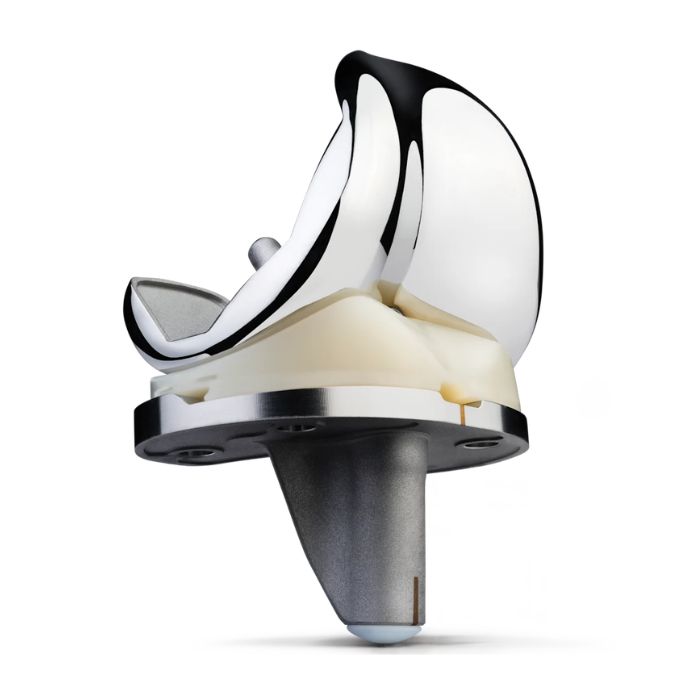
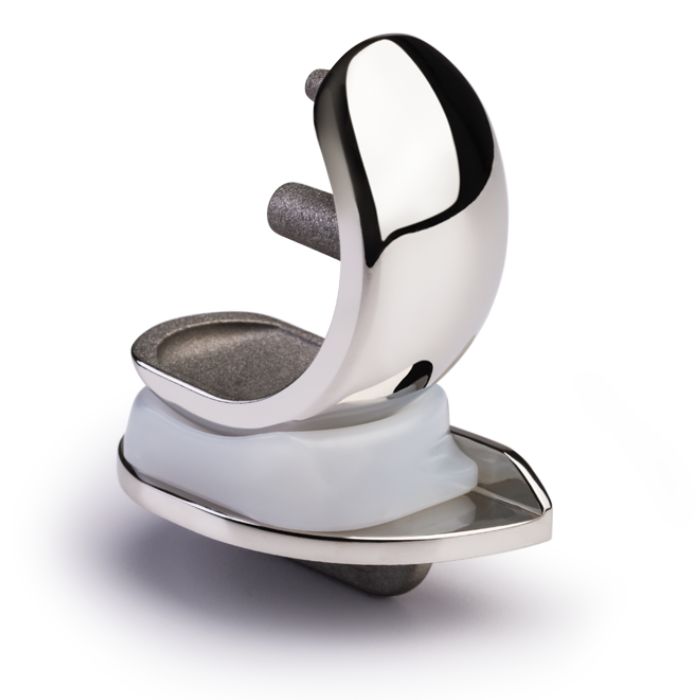
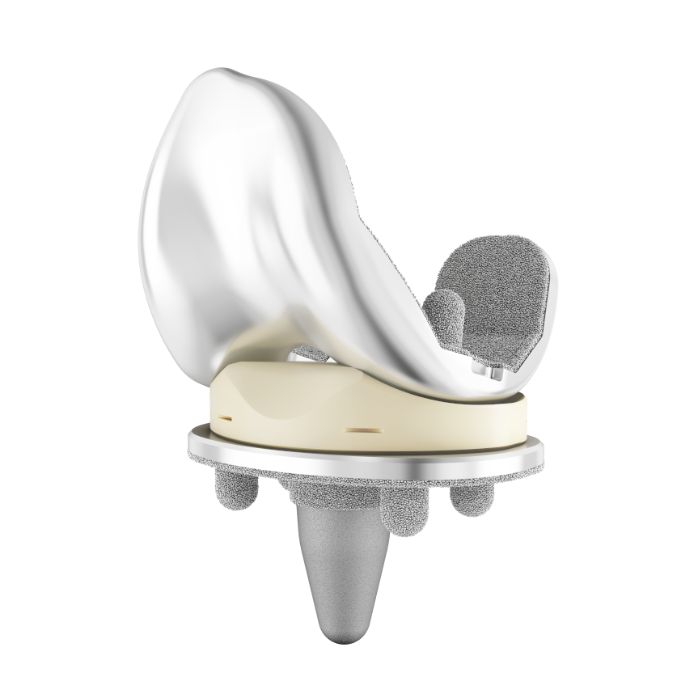
We use the world's leading knee replacement implants

At Emineo Private Hospital, we use several internationally recognised implant systems. Not every patient receives the same implant during knee replacement surgery. Choosing the right one is always a personalised medical decision.

Premium quality. Long lifespan. Trusted manufacturers.

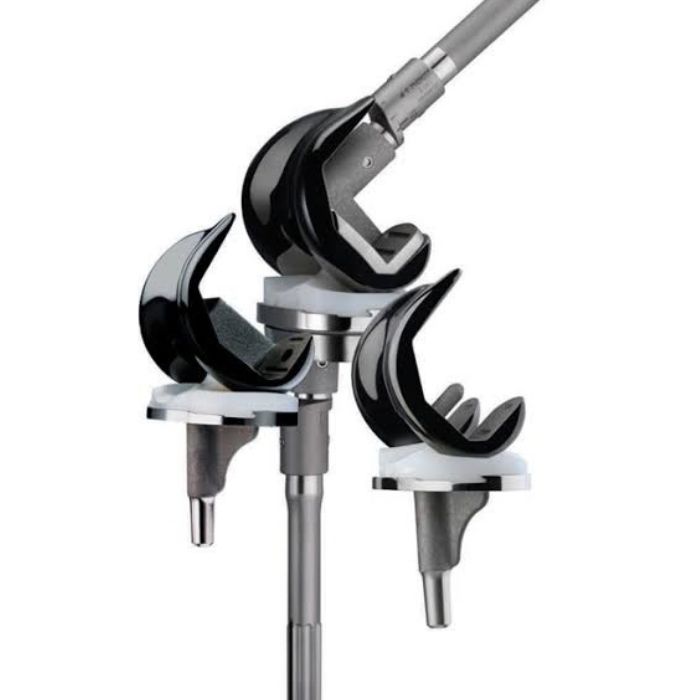
Zimmer Biomet Persona personalised knee system

Zimmer Biomet Oxford partial knee

DePuy Synthes ATTUNE total knee system

Smith+Nephew LEGION total knee system

Would you like to know more about each knee implant? Book a knee surgery consultation!

Don’t let knee pain limit your everyday life any longer!

With knee replacement solutions tailored to each patient, we help you regain your freedom of movement!
Book a consultation with a knee surgery specialist!

Renowned knee surgeons, recognised in Hungary and internationally

The surgeon is still the key to a successful knee replacement! At Emineo Private Hospital, renowned knee surgeons recognised both in Hungary and internationally work together, often as a team.

Dr Zsolt Knoll, PhD, our hospital’s medical director, is often described as one of the best knee surgeons in the country and has been performing knee surgery for nearly four decades.

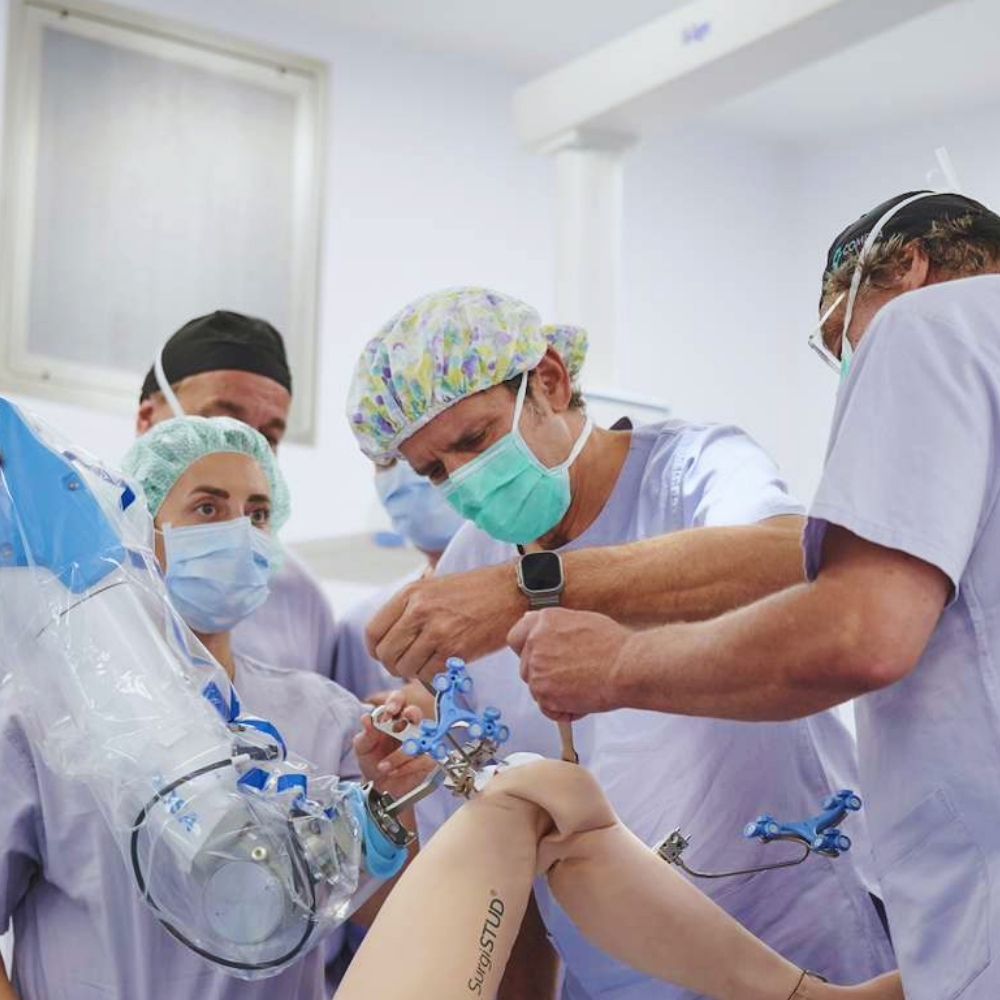
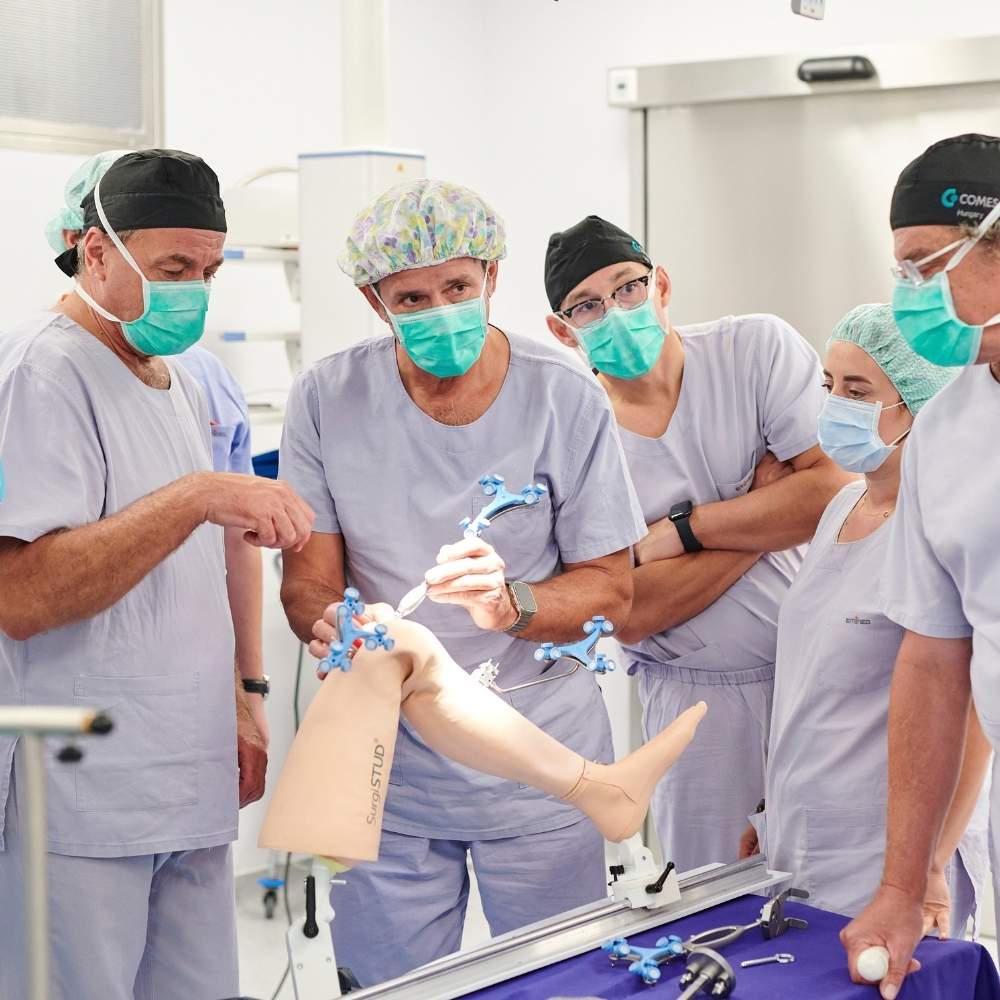
Generations of orthopaedic surgeons have trained under his guidance. Emineo Private Hospital also operates as a training centre for orthopaedic surgery, where, alongside Dr Zsolt Knoll, several of our outstanding knee surgeons use and teach robot-assisted surgical procedures.

Our doctors
Meet our knee replacement specialists!

Meet our knee replacement specialists

Dr. Bánki László

Ortopédia-traumatológia

Dr. Drajkó Balázs Márk

Daganatsebészet, Ortopédia

Dr. Fabula János

Ortopédia

Dr. Háncs Tivadar

Csípősebészet, Ortopédia-traumatológia, Térdsebészet

Dr. Janositz Gábor

Ortopédia, Sportorvostan

Dr. Klára Tamás Csaba PhD

Csípősebészet, Ortopédia, Térdsebészet, Traumatológia

Dr. Knoll Zsolt PhD

Ortopédia, Térdsebészet, Traumatológia

Dr. Kocsis András Bernát

Csípősebészet, Ortopédia, Térdsebészet, Traumatológia

Dr. Kovács Krisztián Balázs PhD

Csípősebészet, Ortopédia, Térdsebészet, Traumatológia, Vállsebészet

Dr. Mécs Zoltán

Csípősebészet, Ortopédia, Térdsebészet, Traumatológia, Vállsebészet

Dr. Mészáros Zoltán

Ortopédia, Ortopédia-traumatológia

Dr. med. habil. Szerb Imre

Csípősebészet, Ortopédia, Ortopédia-traumatológia, Térdsebészet

Dr. Sződy Róbert Gábor

Csípősebészet, Ortopédia-traumatológia, Térdsebészet

Dr. Tácsik Balázs

Csípősebészet, Ortopédia, Térdsebészet, Traumatológia

Dr. Udvarhelyi Iván

Csípősebészet, Ortopédia, Térdsebészet, Traumatológia

Dr. Vásárhelyi Gábor

Ortopédia-traumatológia

Dr. Weninger Viktor PhD

Ortopédia, Vállsebészet

Dr. Zsákai Zsolt ortopéd-trauamtológus

Dr. Zsákai Zsolt

Csípősebészet, Ortopédia-traumatológia, Térdsebészet

Tudjuk, hogy a térdprotézis műtét nagy döntés.

Mindenki a legjobb orvost, a leghatékonyabb eljárást, a legtartósabb implantátumot szeretné megtalálni a lehető legjobb áron, miközben számtalan kérdése van…

Jöjjön el legközelebbi ingyenes PROTÉZIS NYÍLT NAPUNKRA és tegye fel kérdéseit személyesen protézis-specialistánknak!

Knee replacement surgery prices

Transparent prices, no hidden costs

Our knee replacement surgery prices are transparent, with no hidden costs. After the examinations, if surgery is recommended, we prepare a detailed, personalised quote.

Térdprotézis beültetés robotasszisztenciával

3 315 000 Ft-tól + implantátum

Térdprotézis beültetés

2 880 000 Ft-tól + implantátum

Térdprotézis beültetés egyedi PSI sablon alapján

3 000 000 Ft-tól + implantátum

What's included in the knee replacement surgery package price?

01

Pre-operative care

  • All necessary diagnostic tests
  • Pre-operative counselling: detailed guidance on what to do and what to avoid before surgery
  • Pre-anaesthetic consultation: an individual discussion of the anaesthetic and pain management plan
02

Hospital care

  • Well-appointed single or double room
  • Meals planned by a dietitian
  • Wi-Fi and television in every room
  • 24/7 on-call medical cover for your safety
  • Provision of necessary medical aids
03

Aftercare

  • First physiotherapy session in the hospital
  • Personalised rehabilitation plan
  • Scheduling of follow-up examinations
  • Telephone advice during your recovery at home
  • Arrangement of patient transport if needed

Knee replacement surgery is performed only when indicated by a specialist at Emineo Private Hospital and is preceded by a knee surgery consultation.

Book a knee surgery consultation!

Térdprotézis műtétek részletfizetéssel is elérhetők

A térdprotézis műtétek esetén részletfizetést is választhat, banki ügyintézés nélkül, melyben pénzügyi partnerünk az Instacash. Így egy váratlan beavatkozás is gyorsan és rugalmasan tervezhető.

Forduljon hozzánk bizalommal! Munkatársaink minden kérdésben készséggel állnak rendelkezésére.

Is every step a struggle? Does pain make it hard to sleep at night? Does the pain stop you from playing with your grandchildren, and do you find yourself cancelling walks together more and more often? You know you need a knee replacement, but you keep putting off the decision…

Don’t wait any longer! Consult Hungary’s leading knee specialists about personalised surgical options!

State-of-the-art operating theatres, hotel-standard inpatient care

200 m² high-tech operating suite

Two large operating theatres and supporting units provide a safe surgical environment. Our theatres meet the standards for day surgery as well as stringent additional requirements. Compliance with these standards is verified annually by an external laboratory.

Luxury and professional excellence in one

Our 18-bed, 10-room ward offers Western European standards of private care in Budapest. Every room has a minimalist design that also takes into account any mobility limitations our patients may have.
Csúcskategóriás műtők az Emineo Magánkórházban Budapesten

Modern operating theatres, advanced equipment

  • Modern equipment and imaging devices
  • Vibration-damped flooring for precision in delicate procedures
  • Specialist engineering technologies for the highest level of sterility
  • 4 on-site sterilisers for maximum flexibility
  • ROSA robotic assistance
  • Real-time visualisation

Inpatient care

  • well-appointed single or double room
  • three meals a day planned by a dietitian
  • Wi-Fi in the rooms
  • 24-hour on-call medical cover
  • continuous nursing support
  • modern patient monitoring systems
  • barrier-free design

The knee replacement process, from examination to surgery

Knee replacement surgery is always performed on the recommendation of an Emineo Private Hospital orthopaedic knee surgeon, after the patient has accepted the personalised quote.

01

Consultation with a knee surgeon

The process begins with a detailed conversation, a physical examination and a review of previous medical records. The specialist assesses the location and severity of the pain, the knee’s range of motion, alignment and stability, and how much the symptoms limit everyday life.

02

Imaging tests

An X-ray is usually needed to determine whether a prosthesis is required and which type. In some cases, an MRI, CT scan or bone density test may also be necessary.

X-ray and ultrasound are available on site at Emineo; further imaging tests are provided at our partner institutions.

03

Surgical recommendation and personalised quote

The specialist explains:

  • whether surgery is needed,
  • which type of prosthesis is recommended,
  • which surgical technique may be suitable,
  • what results can be expected and what rehabilitation will involve,
  • and which tests are needed before the procedure.

A detailed, personalised surgery quote is then prepared.

04

Pre-operative assessment

Before the procedure, lab tests, an anaesthesia consultation and further tests may be required depending on your individual health status.

The anaesthetist reviews the patient’s medical conditions and medications, then discusses and agrees the anaesthetic and pain management plan with the patient.

05

The day of surgery

The patient arrives at the hospital at the agreed time. After preparation, regional or general anaesthesia is administered and the procedure begins.

Knee replacement surgery usually takes 1–1.5 hours. The surgeon removes the damaged joint surfaces, prepares the bone, then implants and checks the appropriate components.

06

Monitoring and early mobilisation

After surgery, the patient is monitored and then returns to their room. Alongside pain relief, wound checks and circulation support, physiotherapy begins shortly afterwards.

Many patients can stand up on the day of surgery or the next day and take their first steps with the help of a physiotherapist.

Take the first step: book a consultation with a knee surgeon!

Pain management during and after knee replacement surgery

A personalised pain management plan is prepared before surgery to address pain, tightness and swelling during and after knee replacement.

During surgery

The anaesthetist selects the appropriate form of general or regional anaesthesia based on the patient’s condition and the type of surgery. This is always discussed with the patient, who is informed of all the details.

After surgery

Pain relief is adjusted according to the patient’s feedback and current condition. Its aim is not only to improve comfort but also to ensure that early mobilisation and physiotherapy can begin safely.

Appropriate pain relief, cooling, compression and gradual movement together help get rehabilitation started.

Recovery after knee replacement surgery

The pace of recovery differs for every patient. It is influenced by, among other things, general health, muscle strength, the surgical technique, mobility before the procedure and active participation in rehabilitation.

Days 1–2 after surgery
  • reducing pain and swelling,
  • sitting up and standing,
  • first steps with a walking aid 6–8 hours after surgery,
  • many of our patients can walk without an aid on the day of surgery
Days 2–3 after surgery
  • starting physiotherapy,
  • exercises to improve circulation and activate muscles,
  • learning the basics of correct walking,
  • we teach you the exercises to do at home
  • patients are usually discharged after 2–3 days
Days 3–4 after surgery
  • most patients experience a significant reduction in pain
  • gradual return to less demanding activities: walking, light exercise
Weeks 1–2 after surgery
  • regular physiotherapy at home,
  • gradual reduction of swelling,
  • wound checks,
  • increasingly independent mobility,
  • improving bending and straightening
Weeks 3–6 after surgery
  • building muscle strength and stability,
  • improving gait,
  • gradually increasing weight-bearing capacity,
  • regaining some everyday activities
Weeks 6–12 after surgery
  • return to most everyday activities,
  • more stable, confident walking,
  • gradually more challenging physiotherapy
3 months after surgery

Rehabilitation can continue by building muscle strength, range of motion and endurance.

Light, low-impact sports can be gradually reintroduced with the approval of your doctor and physiotherapist

Don’t let knee pain limit your everyday life any longer! With individual knee replacement solutions tailored to each patient, we help you regain your freedom of movement!

Book a consultation with a knee surgeon!

Rehabilitation after knee replacement surgery

Recovery doesn’t end with surgery. Rehabilitation is just as essential to a successful recovery as the operation itself.

We support our patients’ recovery with a comprehensive, coordinated therapy programme using the most advanced therapeutic methods, so they can return to a pain-free, active everyday life as soon as possible.

The goals of rehabilitation after knee replacement

  • reducing pain and swelling,
  • improving the knee’s ability to bend and straighten,
  • restoring the joint’s range of motion,
  • strengthening the thigh muscles,
  • developing a stable gait,
  • preventing knee stiffness,
  • safely relearning everyday movements.

Rehabilitation starts in the hospital

In the hospital, our physiotherapists teach you how to get up safely, how to use your walking aid and the basic exercises you’ll need to do regularly at home.

Personalised rehabilitation plan

After discharge, we can provide our patients with a personalised rehabilitation plan which, depending on their condition, may include physiotherapy, other physical therapies, manual therapy and later a post-rehabilitation exercise programme.

We monitor the patient’s progress at follow-up examinations and adjust the load and the rehabilitation plan as needed.

Why choose Emineo Private Hospital?

The success of knee replacement surgery doesn’t depend on the procedure alone. An accurate diagnosis, the right surgical technique, an experienced professional team and well-structured rehabilitation all matter. At Emineo, we provide coordinated care from the first examination to full recovery.

Personalised surgical solution

We don’t use the same technique for everyone. Our knee specialists choose the right prosthesis and surgical procedure based on the condition of your knee, your anatomy, lifestyle and bone quality.

Multiple surgical technologies in one place

We perform conventional, PSI-guided, ROSA® robot-assisted and revision knee replacements, so the decision is driven by the solution that’s best for you – not by the technology that happens to be available.

Experienced, internationally recognised knee replacement specialists

Operations are performed by experienced orthopaedic surgeons specialising in knee surgery and knee arthroplasty, who accompany you through the entire recovery process, from the initial examination to follow-up visits.

Modern technology

Advanced diagnostic imaging, individual surgical planning and the ROSA® robot-assisted system support precise preparation, correct implant positioning and a well-balanced knee.

The complete patient journey in one institution

Specialist consultation, diagnostics, surgical preparation, hospital care, physiotherapy and rehabilitation are all available in one place, fully coordinated.

A safe hospital environment

In our modern inpatient ward, continuous medical and nursing supervision, comfortable rooms, personalised pain relief and early mobilisation support you through the first days after surgery.

Rehabilitation starts right after surgery

During your hospital stay, our physiotherapists help you stand up for the first time, learn to walk safely and master the exercises you can continue at home.

Get back to moving with confidence and freedom, without pain, with our personalised knee replacement solutions! Book a knee surgery consultation!

Don’t put off your decision! Choose Emineo Private Hospital’s personalised knee replacement solutions!

Book a knee surgery consultation!

Patient Feedback on Knee Replacement Surgery and Our Knee Surgeons

I would like to express my sincere appreciation and satisfaction with the entire team at Emineo Private Hospital. I had both knees replaced at the same time using robot-assisted surgery. The operation took place on Wednesday, and I was discharged by Saturday morning. Throughout the surgery and post-operative care, every member of staff – doctors, nurses and physiotherapists alike – demonstrated exceptional care, professionalism and compassion.

I would especially like to thank Dr Zsolt Knoll, who is not only an outstanding surgeon but also an incredibly kind and empathetic person. My heartfelt thanks go to the entire hospital. It is rare to experience such a high standard of care. I wholeheartedly recommend Emineo Private Hospital to everyone.

I had robot-assisted knee replacement surgery. Excellent doctors, high-quality care and, considering it is a private hospital, very reasonable pricing compared with other institutions.

When surgery becomes necessary, it is reassuring to go somewhere where patients are treated with kindness, a friendly smile and genuine patience, almost as though they were part of one big family. I went into surgery without any anxiety because I knew I was in good hands.

I attended my one-week follow-up appointment without crutches or a limp, thanks to Dr Zsolt Knoll and Dr Gábor Janositz.

Choosing Emineo was the right decision, and I cannot recommend it highly enough.

I had been suffering from persistent knee problems for nearly 10 years. The pain became increasingly unbearable, and the doctors treating me were unable to help. At my very first consultation, Dr Zsolt Knoll determined that a knee replacement was the only treatment that could provide lasting relief. I put my trust in him and decided to go ahead with the surgery.

All the pre-operative preparations took place as scheduled, with everything running smoothly and punctually. The operation went well, and my recovery was remarkable. At the age of 70, I was walking without crutches after just two weeks, and within five weeks, I was already able to cycle several kilometres.

The care I received at the hospital was impeccable. I was surrounded by attentive staff, excellent facilities and spotless surroundings. I would particularly like to highlight the dedication and professionalism of the physiotherapists and massage therapists, whose consistent support played a major role in my rapid recovery following the successful operation.

I am deeply grateful to Dr Zsolt Knoll for enabling me to use my leg fully again. I wholeheartedly recommend his outstanding expertise and compassionate approach, as well as Emineo Private Hospital as a whole, to anyone seeking treatment and recovery.

I had both knees replaced, and I was extremely satisfied with every aspect of my care – from the surgery itself to the medical and hospital services, including physiotherapy, meals, the attentiveness of the staff and the post-operative care.

I had knee surgery and stayed in a private room in a clean, quiet environment. The nurses and doctors were all incredibly kind, and I felt I was in the best possible hands, surrounded by true professionals. I wasn’t nervous at all because I knew everything would be fine.

I would wholeheartedly recommend Emineo Private Hospital to everyone.

Attentive medical care, a varied, vitamin-rich diet and an excellent team of physiotherapists all contributed to my recovery. I am very grateful for their support!

I attended my six-week post-operative follow-up appointment, where I received thorough answers, explanations and advice regarding all my questions. All my examination results were emailed to me later that same day.

At my annual follow-up appointment after knee replacement surgery, everything ran exactly on schedule. The examination was thorough, the advice was professional and helpful, and the staff were courteous throughout.

I would wholeheartedly recommend Emineo Private Hospital and its entire team to everyone.

I cannot speak highly enough of Emineo Private Hospital. Every aspect of my care, from start to finish, was meticulously planned and carried out.

This was my second time receiving treatment at Emineo Private Hospital. A professional, dedicated and well-coordinated team works together to support patients throughout their recovery. Dr Zsolt Knoll performed my knee replacement surgery. I am truly grateful to my surgeon and all the staff involved in preparing for and carrying out the operation, as well as providing my post-operative care!

I had robot-assisted knee replacement surgery two weeks ago. The reassuring presence and expertise of Dr Zsolt Knoll and his colleagues gave me complete confidence that the operation would be a success. Just two weeks later, I can already walk without crutches!

A huge thank you to everyone! I never felt as though I was in a hospital for a single moment. The food was delicious and plentiful, and both the room and bathroom were spotless! I was even secretly hoping I might have to stay another day or two! :))

My pain has completely disappeared. It may sound strange, but I left the hospital with truly wonderful memories of the experience!

I had knee replacement surgery at Emineo a year and a half ago. The pain has gone, and my mobility has improved significantly. Based on my positive experience, I am now preparing to have my other knee operated on.

Just starting to learn about knee replacements? Let’s start with the basics!

We’ve gathered the most important basics about knee replacement, when surgery is needed and the types of knee prostheses.

When might knee replacement surgery be needed?

Knee replacement surgery usually becomes necessary when knee osteoarthritis has progressed to the point where pain and limited mobility significantly reduce quality of life and restrict everyday activities, and physiotherapy, other physical therapies, medication or injection therapy no longer bring adequate, lasting improvement.

Warning signs may include:

  • your knee hurts even on a short walk,
  • climbing stairs is getting harder,
  • standing up from a chair is painful,
  • the distance you can walk is decreasing,
  • your knee hurts at rest or at night,
  • you can’t fully bend or straighten your leg,
  • your knee swells regularly,
  • your walking becomes unsteady,
  • you develop a limp or visible bow legs or knock knees,
  • you have to give up your usual activities because of the pain.

The need for a prosthesis isn’t decided by a single X-ray or by age alone. A surgical recommendation is based on an overall assessment of your symptoms, imaging results, mobility limitations and quality of life.

Our knee specialist decides on the need for surgery and the ideal surgical technique after the appropriate examinations!

Book a knee surgery consultation!

How is the need for knee replacement diagnosed?

Determining whether you need knee replacement surgery requires a thorough medical assessment. The first step is to book a knee surgery consultation.

01

Consultation with a knee surgeon

Discussing your symptoms and medical history

The knee specialist will ask how long you’ve had the pain; where and in what situations it occurs; how much it limits walking and everyday movement; whether you’ve had any previous injury or surgery; what treatments you’ve already tried; and what other medical conditions you have.

Physical examination

The specialist checks the knee’s range of motion; bending and straightening; ligament stability; knee alignment; muscle strength; painful areas; and your walking pattern.

02

Diagnostic imaging

The extent of knee osteoarthritis can usually be assessed with an X-ray. The image may show narrowing of the joint space, changes to the bone surfaces and the formation of bone spurs.

An MRI or CT scan may be needed if, in addition to the bones, the cartilage, ligaments or other soft tissues need to be examined in more detail.

03

Diagnosis and surgical recommendation

After the examinations, the knee specialist determines:

  • whether conservative treatment may still be enough,
  • whether a joint-preserving procedure is possible,
  • whether a partial or total prosthesis may be appropriate,
  • and which surgical technique may be suitable.

As the first step towards a diagnosis, book a knee surgery consultation!

What is knee osteoarthritis, what are its symptoms and what types are there?

In knee osteoarthritis (also called knee arthrosis), the smooth cartilage covering the joint surfaces gradually thins and becomes damaged.

Cartilage reduces friction between the bones and helps the knee move smoothly. As the cartilage layer thins, the bone surfaces move closer together. This can lead to pain, inflammation, stiffness and limited mobility.

The most common symptoms of knee osteoarthritis

  • knee pain that appears or worsens with weight-bearing,
  • “start-up” pain after sitting or resting for a long time,
  • stiffness in the morning or after rest,
  • discomfort when climbing stairs,
  • cracking or clicking sounds,
  • recurring swelling,
  • decreasing range of motion,
  • limping,
  • instability or a feeling that the knee is giving way,
  • pain at rest and at night,
  • worsening bow legs or knock knees.

Symptoms usually worsen slowly and gradually. It’s worth seeing a specialist as soon as the pain keeps coming back – not only once walking has become significantly limited.

Types of knee osteoarthritis

  • Primary knee osteoarthritis
  • Secondary knee osteoarthritis
  • Osteoarthritis limited to one compartment
  • Osteoarthritis affecting several parts of the joint

Not sure whether you need a knee replacement?

Knee pain isn’t always caused by advanced osteoarthritis. The exact cause can be determined through a specialist examination and, if necessary, diagnostic imaging.

After the examination, our knee specialist will explain:

  • what is causing your symptoms,
  • the condition of your knee joint,
  • which treatment options may be suitable,
  • and whether knee replacement surgery is actually justified.

Following the examinations, the knee specialist will determine whether you need a knee replacement. Book an appointment today!

What types of knee prostheses are there?

The type of prosthesis determines which part of the knee is replaced, which implant is used and how it is fixed.

Partial knee replacement – unicompartmental ("sledge") prosthesis

This may be an option if the wear affects only one compartment of the knee, while the rest of the knee and the stabilising ligaments are in good condition.

Since only the damaged part of the joint is replaced, more of your own bone and joint surface can be preserved.

Total knee replacement (TKR)

Used for advanced wear affecting several parts of the joint. During surgery, the damaged joint surfaces of the thigh bone (femur) and shin bone (tibia) are replaced with implants.

This is the most commonly used type of prosthesis for extensive knee osteoarthritis.

Patellofemoral prosthesis

A special partial prosthesis that can be used when the wear mainly affects the joint surface between the kneecap and the thigh bone, while the rest of the knee is still in good condition.

Book a consultation with our knee specialists, who will determine which type of knee replacement is right for you following a thorough examination!

Cemented or cementless knee replacement?

Knee prostheses can also be categorised by the type of fixation. There are two types.

Cemented knee prosthesis

The implant is fixed to the bone with a special medical bone cement. The fixation is immediately stable, so it is often the right choice for older patients or those with poorer bone quality.

Cementless knee prosthesis

The bone gradually grows into the implant’s special surface. It may be an option for patients with good bone quality, particularly those who are younger or more active.

Neither fixation method is generally better than the other. The knee specialist makes the decision based on bone quality, age, activity level, body weight and individual anatomy.

Book an appointment with our knee specialists in just a few clicks!

Get fast, reliable answers to your questions so you can start your journey to recovery.

Knee prosthesis ratings: the ODEP rating

The ODEP rating is an independent, international expert assessment. It shows the duration and strength of the clinical evidence supporting an implant’s performance and durability. ODEP stands for Orthopaedic Data Evaluation Panel.

An ODEP rating consists of two parts:

  • The number (e.g. 5, 10 or 15) shows how many years of follow-up data are available for the implant.
  • The letter shows the strength of the evidence: B, A or A*. A* represents the strongest level of evidence.

It’s important to note that an ODEP rating is not a simple quality ranking. On its own, it doesn’t determine which knee prosthesis is best for a particular patient. It assesses the strength and duration of the clinical evidence behind a given implant. For knee prostheses, ODEP evaluates the complete implant construct, meaning the specific combination of components.

All implants used at Emineo Private Hospital are of the highest quality.


Would you like to learn more about the knee replacement implants used at Emineo Private Hospital? Book a consultation with our knee specialists!

Gyakori kérdések a térdprotézisekről, a térdprotézis műtétről, felépülésről és rehabilitációról

Mikor van szükség térdprotézisre? Mikor javasolt a térdprotézis műtét?
A térdprotézis műtét akkor javasolt, ha minden más kezelés (gyógytorna, gyógyszer, injekció, életmódváltás) már nem hoz érdemi javulást. Térdprotézis akkor javasolt, ha:
  • a fájdalom állandó, nyugalomban vagy éjszaka is jelentkezik,
  • a járás nehéz, a beteg sántít vagy már csak rövidebb távokat bír,
  • a mozgástartomány beszűkült, például nem tud leguggolni vagy teljesen kinyújtani a lábát,
  • a mindennapi élet (lépcsőzés, felkelés, közlekedés) komolyan akadályozott,
  • röntgen súlyos ízületi károsodást igazol,
  • a konzervatív kezelések nem enyhítik a fájdalmat.
Térdsebész kollégáink minden esetben személyre szabottan döntenek a beavatkozás szükségességéről. Foglaljon időpontot térdsebészeti szakorvosi vizsgálatra vagy keressen minket telefonon a a 06 1 773 3333-as teelfonszámon további lépésekkel kapcsolatban!
Ki az ideális páciens a térdprotézis műtétre? Van korhatára a térdprotézis műtétnek?
A térdprotézis műtétnek nincs szigorú korhatára, a döntés a páciens állapotától, életmódjától, fájdalmi és funkcionális korlátaitól függ. Fontos, hogy a beteg fizikailag felkészült legyen az altatásra, a műtétre és a rehabilitációra. Térdspecialista szakorvosaink ezt az előzetes vizsgálatok során alaposan felmérik. Foglaljon időpontot a térdprotézis protézis műtéthez szükséges térdsebészeti szakorvosi vizsgálatra vagy keressen minket telefonon a 06 1 773 3333-as telefonszámon a további lépésekkel kapcsolatban!
Mennyi ideig tart egy térdprotézis műtét?
A térdprotézis műtét általában 1- 1,5 órát vesz igénybe, beleértve az előkészületeket is. Tudjon meg többet az Emineo Magánkórházban elérhető térdprotézis műtétekről
Milyen térdprotézis műtétek érhetők el az Emineo Magánkórházban?
2 féle térdprotézis műtéti eljárást végzünk az Emineo Magánkórházban:
  1. Hagyományos térdprotézis műtét. Bevált, biztonságos eljárás, amelyet tapasztalt térdspecialista ortopéd szakorvosaink végeznek.
  2. Robotasszisztált térdprotézis műtét. Az egyik legmodernebb és legbiztonságosabb beavatkozási módszer, az amerikai fejlesztésű, ROSA®, precíziós, robotasszisztált térdprotézis-beültetés.
Mi az a robotasszisztált térdprotézis műtét?
A robotasszisztált térdprotézis műtéti technológia a sebészt segíti abban, hogy a térdprotézis beültetése mikromilliméteres pontossággal történjen. A robot 3D-s modellt készít a térdről és valós idejű adatokat küld a sebésznek, így az implantátum pontosan a beteg anatómiai adottságaihoz illeszthető, illetve minimalizálja a szöveti sérülést. Ez gyorsabb felépülést, kényelmesebb, természetesebb mozgásérzetet és hosszabb távú stabilitást jelent. Az Emineo Magánkórházban található Magyarország legnagyobb Ortopéd Robotsebészeti Centruma.
Mennyi a térdprotézis műtét utáni gyógyulási idő, rehabailitáció?
Egyénenként változó a felépülés időtartama. Általában 6–12 hét szükséges a a térdprotézis műtét utáni teljes felépüléshez. A robotasszisztált térdprotézisműtét után a gyógyulás gyorsabb lehet, mert a beavatkozás precízebb és a szövetek kevésbé sérülnek. Általános tapasztalataink a térdprotézis műtét utáni felépüléssel kapcsolatban a következők. 1. A legtöbb páciens már a beavatkozás után 6-8 órával (gyógytornászaink segítségével) feláll, sokan már mankó nélkül is képesek hazamenni, de többségükről elmondható, hogy 1-2 héten belül önállóan járnak. 2. A műtét másnapján a helyszíni gyógytorna következik, amely során megtanítjuk az otthon végzendő feladatokat is. Amennyiben minden rendben zajlik, pácienseink 2 nap elteltével hazatérhetnek otthonukba 3. Milyen tevékenységet mikor lehet végezni:
  • Autóvezetés: 2-3 héttel a műtét után már lehet autót vezetni, amint a térd mozgása és izomereje helyreáll.
  • Szobakerékpározás: 2-3 hét
  • Szabadtéri kerékpározás: 8-12 hét
  • Úszás: 8 hét (csak gyorsúszás)
  • Fürdők, szaunák látogatása: 12 hét
  • Ugró mozdulattal, kitöréssel járó sportok/labdajátékok (pl.tenisz): 16-20 hét
A pontos időzítést a kezelőorvos egyénileg határozza meg. 4. A robotasszisztált térdprotézisműtét után a gyógyulás gyorsabb lehet, mert a beavatkozás precízebb és a szövetek kevésbé sérülnek. 5. A térdprotézis utáni rehabilitációt a legkorszerűbb terápiás módszereket alkalmazva segítjük a fájdalom csökkentését, a gyulladás enyhítését és az ízületi mozgástartomány helyreállítását. A kezelések célja minden esetben a mielőbbi felépülés elősegítése – legyen szó műtét utáni rehabilitációról vagy konzervatív terápiáról. Pácienseink gyógyulását komplex és összehangolt terápiás programmal támogatjuk, hogy mielőbb visszatérhessenek a fájdalommentes, aktív mindennapokhoz. Bővebben az Emineo Magánkórházban elérhető térdprotézisekről.